Ways to Transform a Room with Real & Faux-Stone Walls
Written by Milan Jara on 18th Feb 2022
Have you ever noticed when you’re in a spa, relaxing on a friend’s patio, or sitting by a fireplace that you get a calm feeling? It could be there is a natural element in front of you including stone walls or accent walls.
A review of studies on natural building materials, including stone and wood, found that exposure to them is associated with lower stress and better mood. A separate study focused on stone found that simply looking at its natural textures reduced people's stress responses. This is why adding stone walls, accents, and elements to your home may be your ticket to creating a stress-reducing and calming space you can retreat to.
Stone adds an earthy counterpoint around a fireplace complementing the fire, and helps create a spa-like retreat in what would have been a typical tiled or painted bathroom or shower wall. And stone can be used anywhere in your home including bedrooms, patios, and kitchens to bring in biophilic design elements, connecting your indoor spaces to nature.
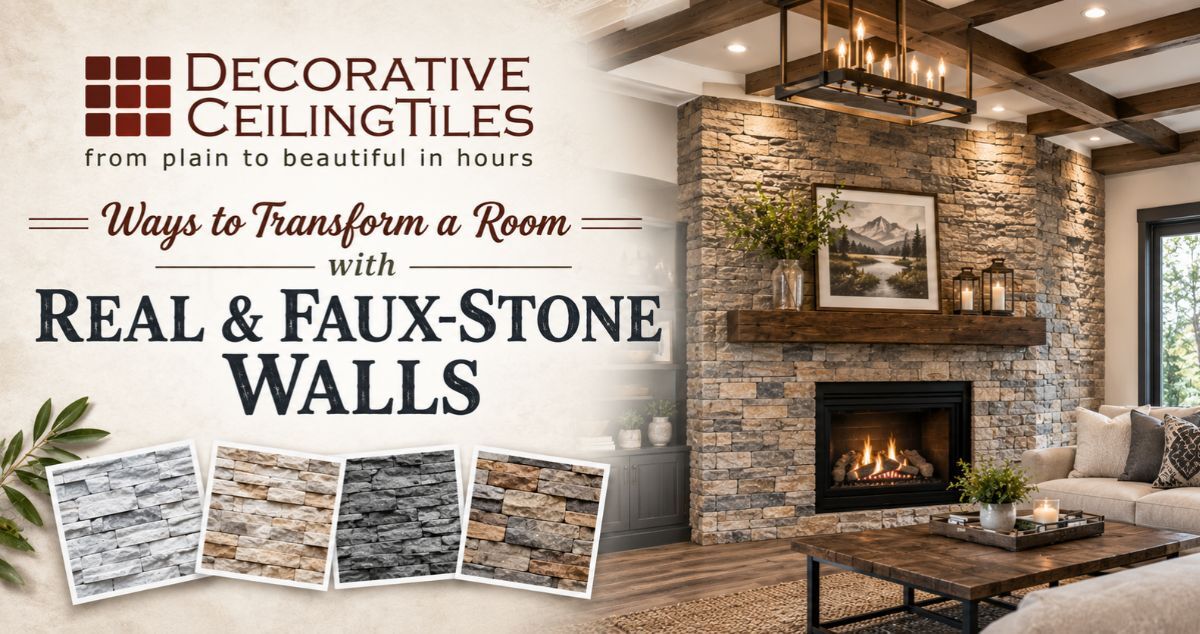
Below you’ll find five ways to incorporate stone into your spaces, but before you get started, it is important to pick out if you want organic and natural stone, or to use faux-stone wall panels and veneers. Both can be good options.
Faux-Stone vs Natural Stone
While it is tempting to want authentic granite, marble, slate, or sandstone, faux-stone veneers can look and feel just like the real thing. Both last for a long time, and both can hold up to natural elements like rain, heat, and snow (when used outdoors) as manufactured stone walls are normally temperature and weather tested. But there are a few differences that will help make your decision for which to choose an easy one.
|
Faux-stone |
Real stone |
|
|
Price |
Cheaper |
Pricier |
|
Labor and installation |
Easier, faster, and more DIY friendly |
More difficult, slower, and a contractor is recommended |
|
Damage |
Durable but discolors with breakage and may fade with UV light |
Durable and keeps natural and consistent coloring with breakage |
|
Weight |
Lighter |
Heavy |
|
Upkeep |
Easy and inexpensive |
More difficult and pricier |
First and foremost is the price. Faux-stone is cheaper to ship because it is lighter than authentic stone, and it costs less because it does not have to be quarried like real stone. The light weight and pre-fabricated veneers make it easier and faster to install compared to having to lay authentic stone and cement or grout it in place. You could likely install a stone accent wall or feature on your own indoors with faux-stone, where it is normally recommended to get a contractor to help with real stone.
With that said, when authentic stones chip or break, the color remains natural and consistent, where faux-stone surfaces will probably reveal the materials they are made from and potentially an unpleasant or unnatural color. This makes authentic stone better for high-impact areas where the wall can get bumped with furniture on a patio or by a car if used near the garage or a parking space in your driveway.
Faux-stone walls and accents will be lightweight and may not need additional support, where natural stone walls and accents will be heavy and could require additional structural support and that comes with additional expenses.
Pro-tip: If you want natural stone, look for a natural stone veneer on a backing or panel for a lighter weight but authentic stone option. It will also be faster and easier to install than laying authentic, full stones.
While real stone is a proud talking point, it is going to need sealant and potentially re-treated a couple times over the course of its life if it is porous. Granite and slate will likely not need sealants and are easier to maintain. But you are going to need special cleaners to clean real stone, and real stone can be a bit rough making it hard to dust. Faux-stones can be cleaned with a damp cloth and don’t require expensive solutions or treatments which saves you money, but if used outdoors it can fade with extended exposure to UV light.
One last decision maker is the look you’re going for. Faux-stone veneers are going to be consistent giving an even look and feel for the entire space which can be nice for some. Real stone walls and accents will change in color, shape, and size as the stones are natural. This can bring a real and authentic look vs. the semi-artificial one of perfectly matching stones.
Both are good options, and now that you know the trade-offs, here’s five ways to incorporate them into your favorite spaces.
5 Ways to Use Stone in Your Home
From a fireplace focal point to spa-like bathrooms, kitchens, or an accent wall, there is no shortage of ways you can add a rustic and calming stone feature to your space.
Fireplace
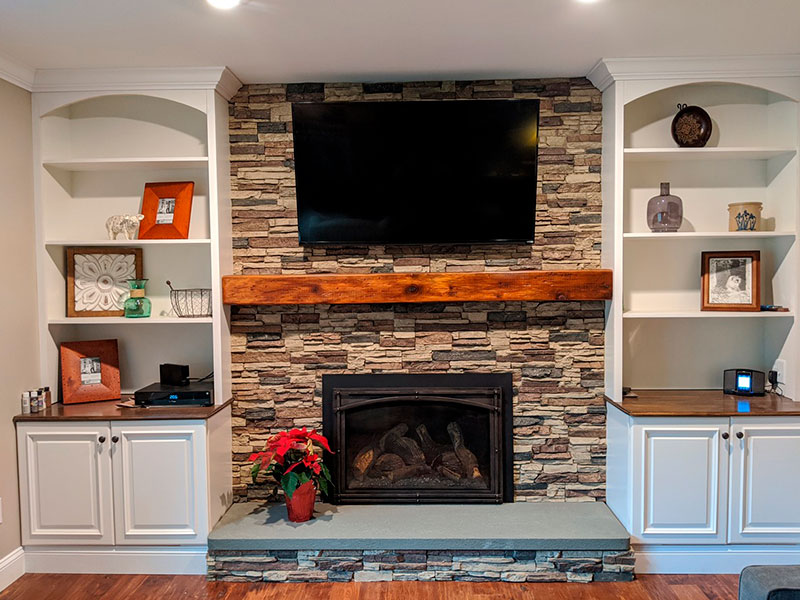
A fireplace already tends to be a focal point, so surrounding it with stone can make it even more eye-catching. A stone fireplace can give a living room a warm, rustic character, while sleek stone tiles can create a more contemporary look.
The main thing to think about is matching the type of stone you choose to the interior aesthetic of your home. Irregular fieldstone has a rustic, natural appearance that works well in cabins or traditional homes. Ledgestone, with thinner horizontally stacked pieces, can give a fireplace a more contemporary look.
You can extend the stone to the ceiling, allowing the eye to draw upward and create a custom, built-in piece. Or use stone as an accent around the firebox, add stone below the mantle, or combine stone with wood beams for an even earthier look.
Stone accents are considered safe to do around the fireplace, but typically shouldn’t be placed inside the firebox and stone, whether faux or real, shouldn’t have direct exposure to flames.
Bathroom
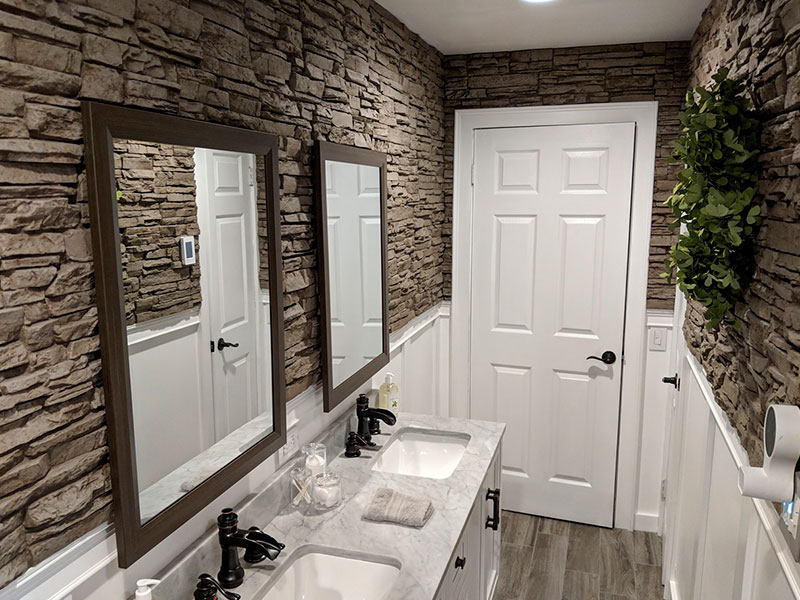
Bathrooms are a natural place to incorporate stone features as the earthy colors and textures help create a relaxing, spa-like atmosphere while creating contrasting textures to smooth tile and countertop surfaces.
A few ways to use stone in a bathroom include:
- An accent behind a freestanding bathtub or vanity.
- A backdrop for a shower (just make sure it is a water friendly material like porcelain).
- An accent wall to bring attention to the depth of the space.
- As the top section of the wall with a crown molding border and painted earthy color on the lower portion.
Light-colored limestone, travertine, marble, or slate are great options for adding calming, natural vibes into your bathroom. Cream and beige stones make a bathroom feel warm and organic, while gray slate or gray-toned marble give it a cool, modern design.
Bathrooms are naturally humid spaces, so choosing the right material for the space ensures your stone accent wall will be durable and easy to maintain. Natural stone like quartzite, granite, and marble can be used in wet areas like showers or bathtubs with the right application. For faux-stone, look for products that can handle direct water exposure or use faux-stone in areas like an accent wall or backsplash that don’t receive direct water spray.
Pro-tip: If you go with authentic stones that are porous like limestone, check to see if you’ll need a sealant.
Kitchen or Dining Area
Kitchens tend to have a lot of hard, smooth surfaces where stone can be used to highlight and accent them. Stone slabs can be used as countertops under and above cabinets, and a stone accent wall where you hang copper and cast iron cookware to add a farmhouse and rustic feel.
Here’s some ways you can add stone features in your kitchen:
- Add a stone accent wall behind a dining table or breakfast nook.
- Add a stone backsplash to your kitchen to contrast with the countertop.
- Frame appliances like the oven or refrigerator with stone.
- Use stone around a kitchen island.
Stone can be a natural pairing with natural materials featured in a kitchen. For instance, warm-toned wood cabinets pair great with warm-toned stones. Rough limestone, weathered ledgestone or river rock can all fit a rustic design. Stacked stones with clean lines can bring symmetry to modern and mid-century modern homes, or use darker stones to contrast white cabinetry.
A kitchen can be a great place to try out stone accents in smaller ways, too. Instead of covering an entire wall, try framing a doorway or use stone on the side of a kitchen island. This gives the room texture and contrast without creating distracting design focal points.
Accent wall
In a living room, a stone accent wall can provide a backdrop for a TV console or seating area. A floor-to-ceiling stone wall creates a dramatic architectural feature, while only covering a portion of the wall can still have a big impact without overwhelming the room.
You can use stone to highlight existing architecture in the space, like a built-in bookcase, arched doorway, or recessed alcove. Living rooms with a lot of colors and patterns could pair stonework in muted colors to balance bold decor, while simple designs can be complemented with the smooth or grainy texture of stone. Stones like granite or marble can add a sophisticated look and travertine or limestone add warmth and depth.
Pro-tip: Some faux-stone veneers are made from noise reducing materials to help keep sounds from escaping or coming in, making them perfect for movie rooms, in-home studios, and home offices. Look for STC for blocking sounds and NRC for catching reflections.
Entryway
An entryway is a great opportunity to make a first impression and because it can sometimes be a small space, adding stonework gives you a lot of visual interest without creating clutter. Try adding stone veneer to the wall behind a staircase or behind the front door.
A stone veneer added to the bottom half of your wall, similar to beadboard panels, has a strong impact in what is normally a smaller and hard to decorate space. The same goes for narrow panels as a way to add dimension in similar smaller spaces. Faux-stone works well in small spaces because it can be manufactured to fit the exact size and shape you need.
Stone can change the character of a room without needing a complete renovation. Whether you use it to create a single accent wall or add drama to your bathroom, stone adds dimension and earthiness to any space. And if you go for faux-stone, you can add all that character with easier installation and get exactly the look you want, without leaving your design aesthetic to nature.