Step-by-step Faux Wood Ceiling Beam Installation Guide
Written by Milan Jara on 23rd May 2026
Installing Faux Wood Beams with Ron Hazelton
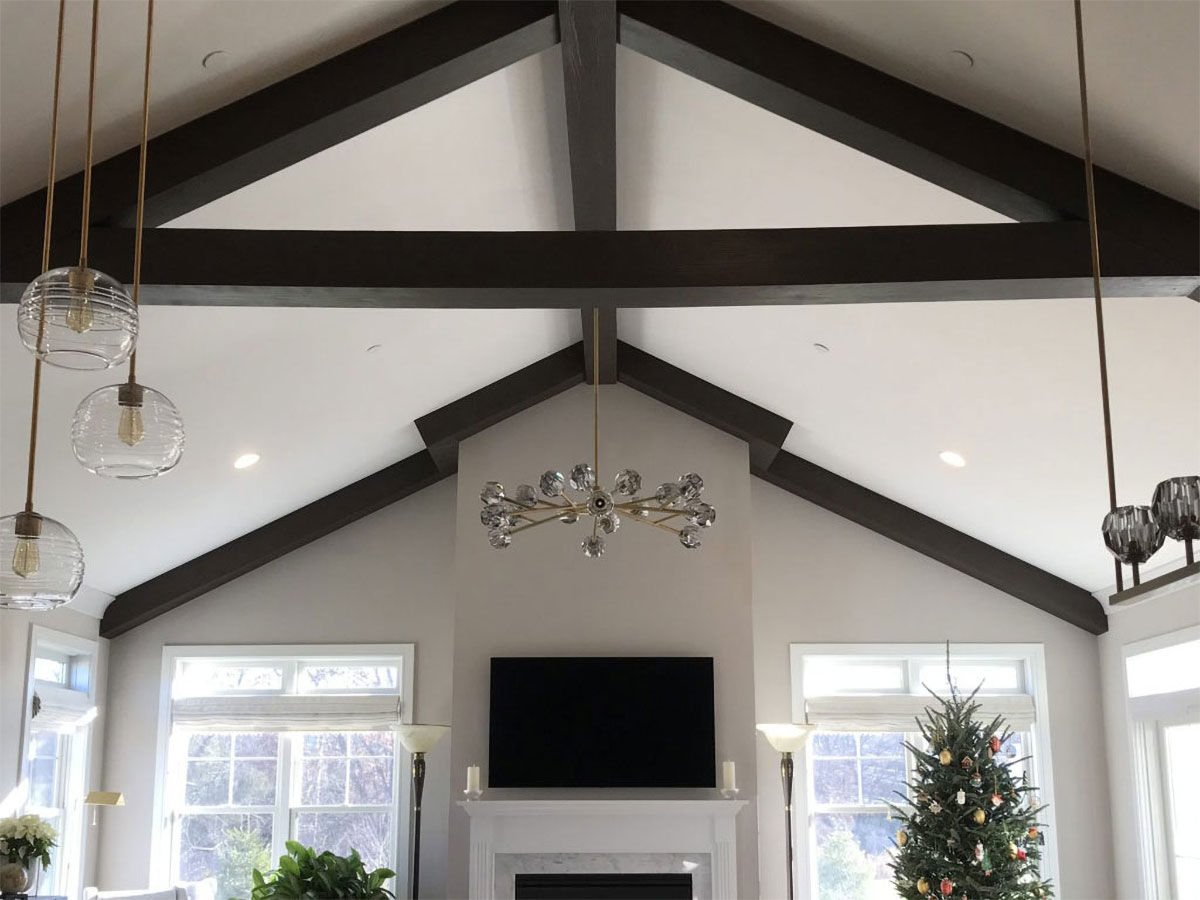
Installing faux wood ceiling beams is easier than you might think, as they’re purely decorative with no structural work needed. These lightweight beams have three sides which allows them to slip over the nailing strips that secure them to the ceiling making installation a great DIY weekend project.
If you’re ready to install faux-wood beams into your spaces, below you’ll find a video we filmed with legendary home improvement expert Ron Hazelton, and then we share each step written out so you don’t have to pause and hit play.
Whether you’re adding a rustic touch to a modern kitchen or creating a cozy mountain cabin atmosphere, here is all of the information you need to get started and finish the installation with confidence.
Tools and Supplies You Need to Install Ceiling Beams
Here are the tools and materials you need to complete this project:
- 2 Ladders and sawhorses
- A stud finder
- 2x2 or 2x4 wood nailing strips
- A straight edge or chalk line
- A box of deck screws, toggle bolts or anchors to install the 2x2s or 2x4s - depending on the surface, whether you're screwing into drywall or into the joists.
- A drill and drill bit
- A box of 2-inch finishing nails or 2-inch finish head screws to install the beams
- A nail gun or hammer
- A measuring tape
- 1 Pencil
- Painter’s tape
- A speed square
- A scoring tool
- A miter saw, circular saw, handsaw or Japanese saw
- An orbital sander or sanding block
- Tubes of adhesive and a caulking gun
- A tube of wood putty and a putty knife
Step by Step Installation Guide
Installing faux-wood beams is a four-step process:
- Mark out your layout
- Install rails
- Cut the beams to length
- Install the beams
We recommend having at least one other person for this project so one person can hold up the nailing strips and beams while the other finishes the step.
Step 1: Mark Out Your Layout
Before anything goes on the ceiling, it’s worth taking the time to get your foundation right. This is where preparing the ceiling comes in once you’ve marked the direction and placement of the beams.
For this step, you need:
- 1 Ladder
- A stud finder
- Painter’s tape
- A measuring tape
- 1 Pencil
- A box of 1-inch drywall nails
- A Hammer
- Chalk line
Start by locating the ceiling joists with a stud finder and mark them with painter's tape. If your beams follow the joists, you’re in luck, as you can secure the nailing strips directly to them. If they don’t follow the joists, follow the steps below.
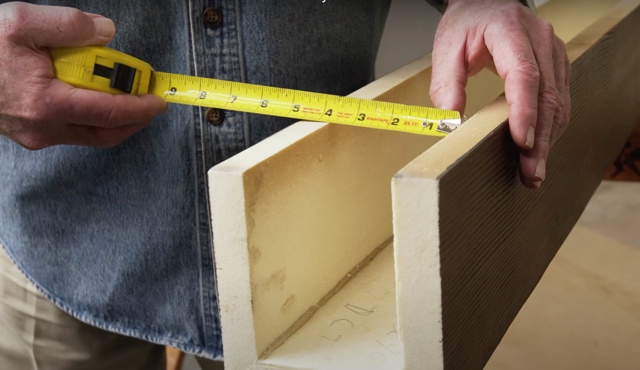
Now measure and mark the location of each beam on the ceiling, then measure the inside of the beams so you know how far apart the outer edges of the nailing strips need to be, and mark accordingly on the ceiling.
If the inside of your beam is 3.5 inches wide, use single 2x4 nailing strips as they are the same width. If it’s over 3.5 inches wide, there will be a gap between a single strip and the beam, so it’s best to use two 2x2 nailing strips spaced apart. This way the outer edges align with the inside edges of the beam.
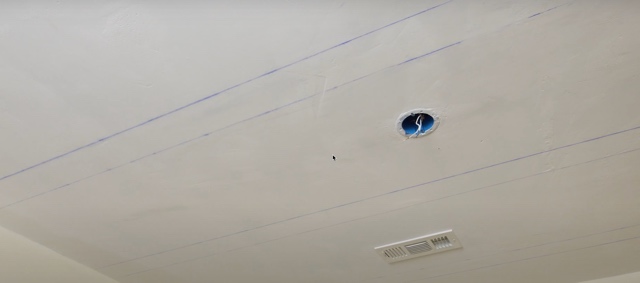
Hammer a nail in on the outer lines on the ceiling close to the wall, and attach a chalk line that you’re going to take to the opposite side of the ceiling and snap. Repeat for every outside line, two per beam.
Step 2: Install the Rails
Now that the chalk lines are up, you can start installing the nailing strips.
For this step, you need:
- 2 Ladders
- 2x2 or 2x4 wood nailing strips
- A measuring tape
- A drill
- 1 ¼ inch drill bit
- A box of toggle bolts or toggle anchors if you screw in drywall or a box of deck screws if you screw directly in the wood ceiling joists
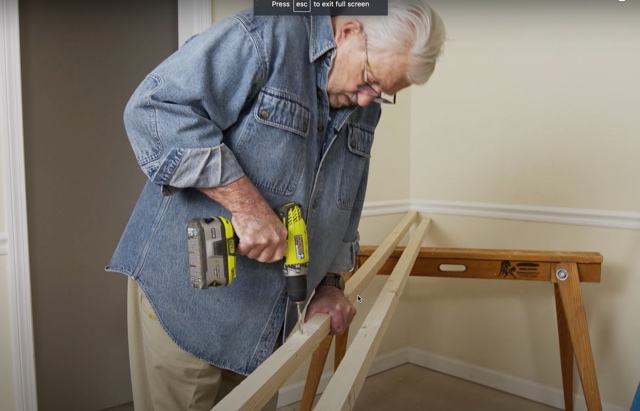
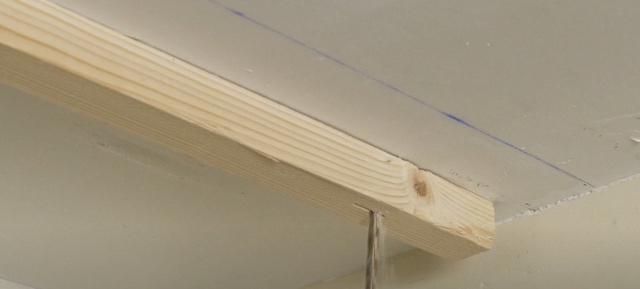
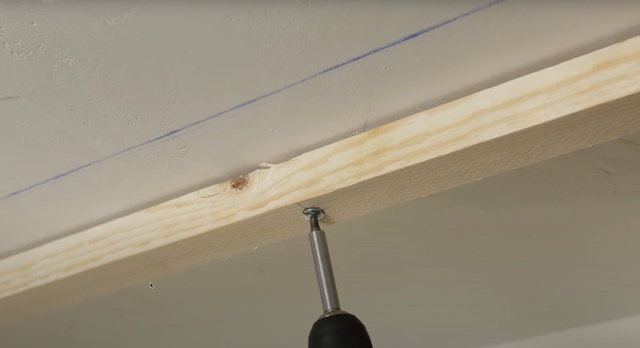
Pre-drill ¼ inch holes every 36 inches on the nailing strips.
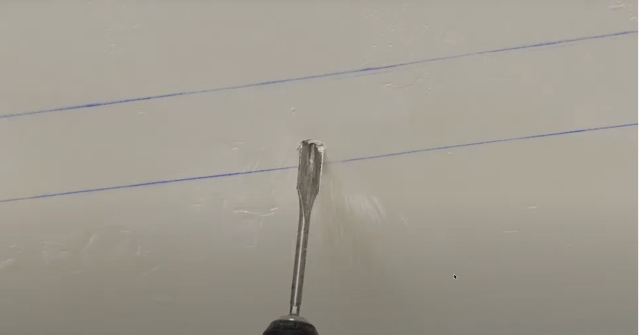
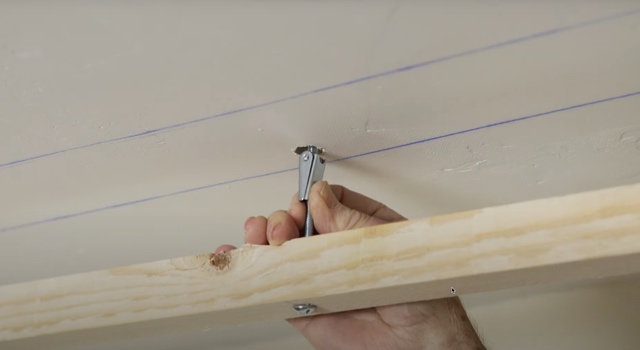
Have one person hold the strips against the ceiling so they are lined up with the chalk line, and the other person drills through the pre-drilled strip holes into the ceiling. If the rails are installed to drywall, they can be fastened to the ceiling with toggle bolts or toggle anchors. If the rails are attached to joists directly, they can be fastened with deck screws.
Check that the faux-wood beams fit over the nailing strips properly, as now is still the time to adjust.
Step 3: Cut the Beams to Lengths
Now it is time to cut the beams to the right lengths.
For this step, you need:
- 2 Ladders
- 2 Saw horses
- A measuring tape
- 1 Pencil or triangle and scoring tool
- A miter saw, circular saw, handsaw or Japanese saw
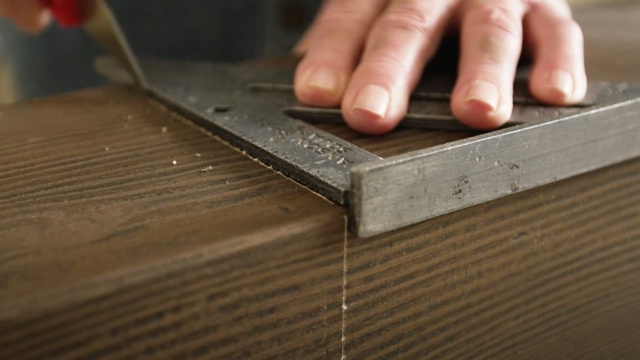
Measure the length of the ceiling with a measuring tape to follow each nailing strip and transfer to the beam. Repeat for every beam as not all ceilings are perfectly straight.
Pro tip: Mark light beams with a pencil and dark beams with a scoring tool so the measurements are less visible.
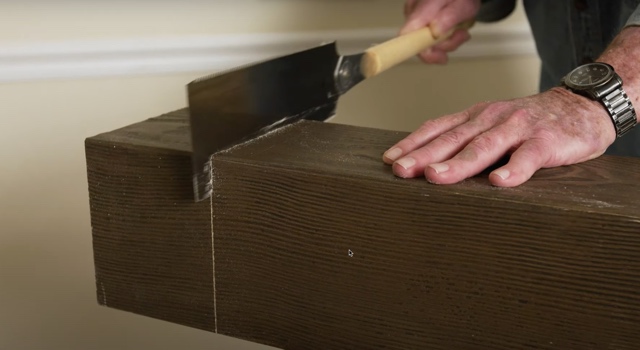
Now use a triangle to mark all three sides of the beam. Finish by cutting the beam with the saw of your choice. Miter saws are good for angled cuts, circular saws can be used for any straight cuts, handsaws are simple and reliable tools and Japanese saws are great for precise and fine cuts.
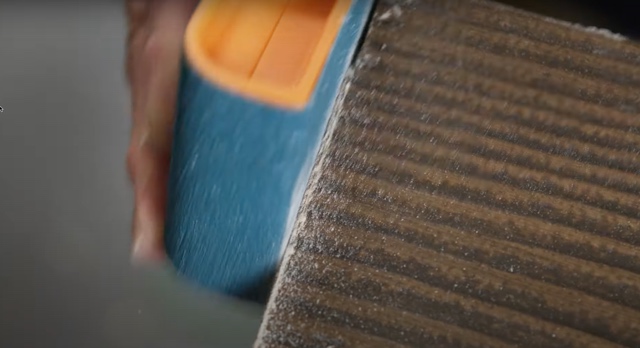
Pro tip: When cutting your beams to length, cut slightly outside the line and sand off the excess with an orbital sander or sanding block. This will give you a more precise fit against the wall.
Hold each beam against the ceiling to make sure the lengths are all correct.
Step 4: Install the Beams
Now it’s time to secure the beams.
For this step, you need:
- 2 Ladders
- Tubes of adhesive
- A caulking gun
- A measuring tape
- A box of 2-inch finishing nails or 2-inch head screws
- A nail gun, hammer or drill
- A tube of wood putty & a putty knife
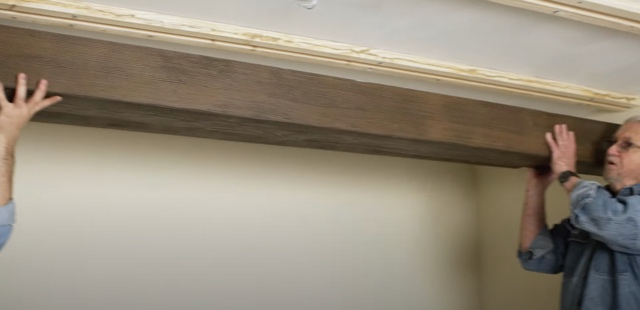
Pro tip: Slip the beams over the nailing strips and check it fits before applying any adhesive. Once the glue is on, it’s too late to make any adjustments.
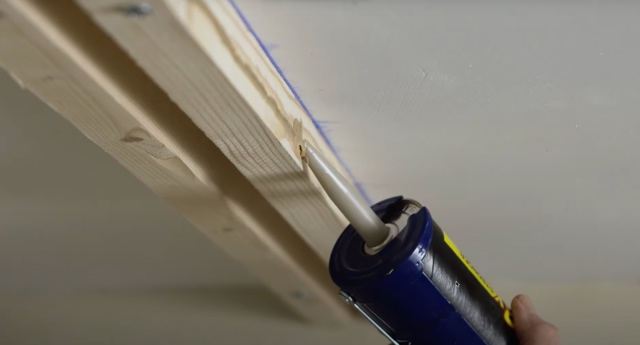
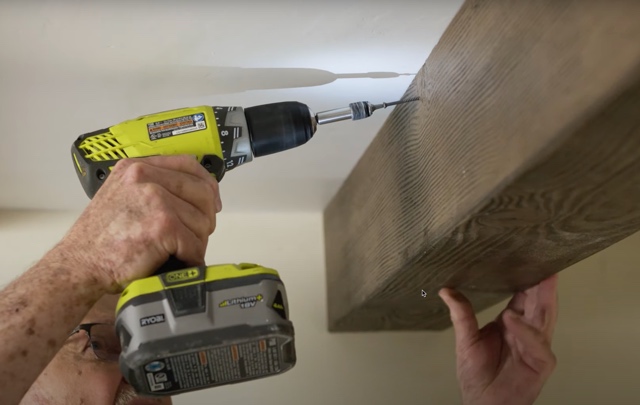
Apply adhesive on the side of the strips and slip the beams over them. Secure the beams with finishing nails or finish-head screws every 12 to 14 inches.
The last step is to fill these holes from the nails and screws with colored wood putty to match the beam finish.
Installing faux-wood beams is an easy DIY program whether you want to refresh a room in your home or create a more warm and rustic space in a hotel or vacation rental property. It’s more cost-effective than real wood ceiling beams, and adds a wow factor that you and your guests will love.