The History of Tin Ceilings and Tin Ceiling Tiles
Written by Milan Jara on 22nd Nov 2024
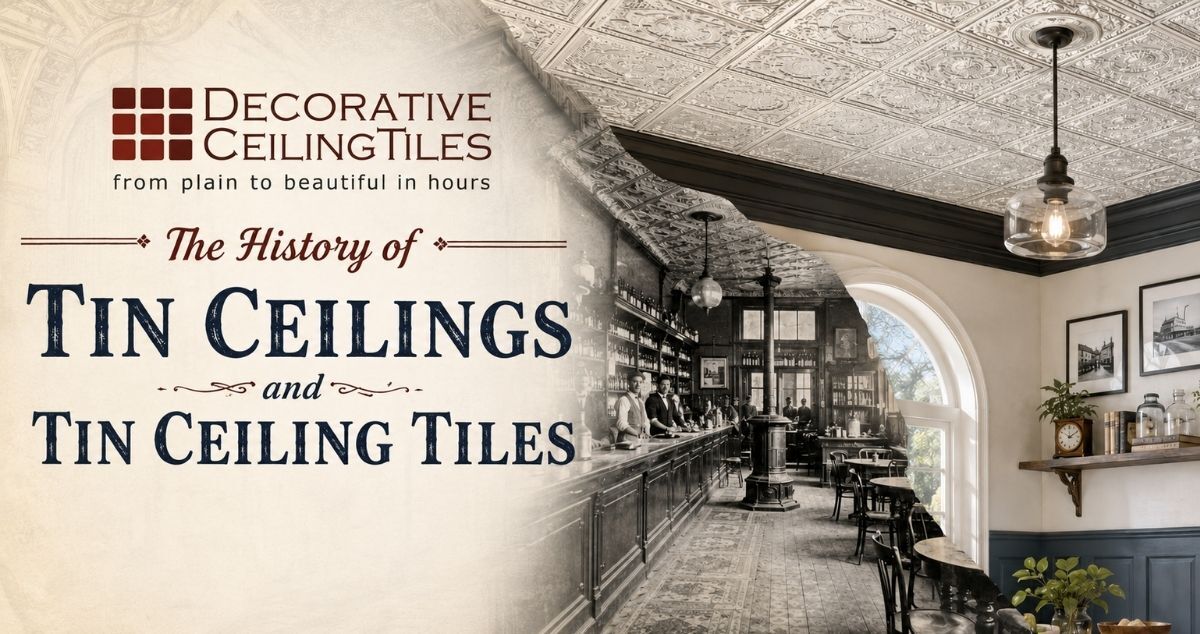
While tin ceiling tiles were first introduced in American interior design in the late 19th century, their origins go back to the 1600’s when ornamental ceilings became a sign of wealth for the elite.
As technology advanced, metals became more advanced and able to be mass produced. They became a replacement for hand painted art as a decorative item, but more important a safety feature in commercial spaces and homes. As manufacturing and transportation continued to evolve, tiny sheets known as ceiling tiles developed, and soon took over restaurants, dining rooms, hotel lobbies, and event spaces like theatres. These are the same styles we use today.
If you’re curious about the evolution from decorative art to functional materials with ornate designs, this guide to the history of tin ceilings and tiles shares the full story from European origins to American engineering and ingenuity.
- 1600s-1700s: European decorative ceilings grew in popularity- European interiors featured highly ornamented ceilings made from plaster, stucco, carved wood, and paint. Renaissance, Baroque and Rococo designers used ceilings as major architectural features, incorporating different motifs and styles. The Hall of Mirrors from 1678 at the Palace of Versailles is a famous example of an ornate, decorative ceiling.
- 1800s: Revival styles in design - In both Europe and America, architecture embraced historic revival styles like Gothic Revival, Renaissance Revival, Rococo Revival and Neoclassicism. This was seen in both households and commercial buildings and created an appetite for an easier way to replicate the look of ornate ceilings.
- 1860s-1880s: Metal ceiling tile manufacturing begins - Sheet iron ceiling panels were manufactured in America as a type of fire protection in homes. Manufacturers began adding decorations to the panels to keep up with the revival trends.
- 1880s-1920: Peak popularity - Tin ceiling tiles became a defining feature of many late-Victorian and early-20th-century American interiors. Manufacturers offered catalogs filled with repeating patterns, borders, cornices and centerpieces, allowing customers to create elaborate ceilings relatively quickly and affordably. The Tenenement Museum has decorative ceiling tiles from this era that double as fire protection and durability.
- 1920s: Manufacturing decline - Revival styles declined in popularity and instead, simpler, modern designs became the trend, leading to a decrease in demand for tin ceiling tiles. The Great Depression shuttered many tin ceiling manufacturers and effectively ended the peak of popularity for decorative tin ceiling tiles for the next 60 years.
- 1980s-today: Decorative ceiling revival and evolution - Another revival spurred by an appreciation for Victorian-era design started in the 1980s as detail and power decor took hold with everything from fashion to furniture and architecture. From there science gave us new materials so in addition to metals, we have PVC, fibers, and other materials for building, design, and decor.
Decorative ceilings may not have started with metals like tin, and in the future tin could be replaced, but this material has stood the test of time and continues to "shine."
1600s-1700s: European traditions
If you look at English manor houses or grand Renaissance, Baroque, and Rococo interiors across Europe, the ceiling became a major design focal point instead of a flat surface as the Baroque art movement and advancements in plaster took off. Artists began using forced perspective (like how we create optical illusions with cameras making action figures life size) and stucco allowed artists and architects to add 3 dimensional sculptural details to the ceiling.
These ceilings were filled with intricate floral patterns, scrollwork, geometric designs, and classical motifs, all carefully hand-carved, molded, or painted and using traditional materials like plaster stucco, or wood. This was because stucco was less expensive and easier to handle than stones. For example, the Hall of Mirrors at the Palace of Versailles is famous for its gilded ceiling work.
The results were stunning, but they also took a lot of time, skill, and money to produce. But the demand for art and ways to show wealth did not fade. It’s these European design traditions that later helped shape what we now think of as tin ceilings. Tin ceilings would go on to use these floral patterns or scrollwork as inspiration for what became mass manufactured in the 1860s.
1800s: Revival design styles
During the 1800s, revival architecture became hugely popular in both Europe and America, as architects and designers looked to the past for inspiration. Instead of developing one dominant new style, the 19th century embraced a mix of revivals, including Gothic, Greek, Renaissance, Rococo and Neoclassical styles. The movement was fueled by the growth of archaeology and interest in history, as well as an American design for sophistication. What was seen as gloomy and depressing in Europe became stylish and sophisticated in Victorian America.
As ornate ceilings became a defining feature of fashionable interiors, homeowners wanted ways to recreate their elaborate look without the cost and labor associated with traditional plasterwork or carved ornamentation. This growing demand for decorative architectural details coincided with advances in industrial manufacturing, making it possible to reproduce intricate patterns more quickly, consistently, and affordably.
These developments would shape the look of tin ceilings, which borrowed heavily from the ornate motifs of popular revival styles while offering a practical way to bring decorative, architectural detail into everyday American interiors. And it wasn't only the walls, ribbed vaulted ceilings took off commercially and the need for decorative ceilings in homes and businesses did too.
1860s-1880s: Metal ceiling tile manufacturing takes off
With the growing popularity for decorative ceilings, manufacturers began producing thin metal sheets with ornate designs that could be painted over and installed in homes or buildings. As industrial manufacturing took off in the 19th century, it became possible to reproduce those same kinds of ornate patterns in thin sheets of metal, usually 2 ft x 2 ft. This is the same size we currently use and see today with modern grid ceilings and use for drop-in ceiling tiles.
Instead of relying on highly trained artisans to create everything by hand, manufacturers could stamp repeating designs into metal panels, making decorative ceilings much faster and more affordable to produce. The Philadelphia Architectural Iron Company was an early manufacturer for these decorative ceiling panels, with corrugated iron panels arranged in decorative sections, and applied ornamental moldings and centerpieces.
Fun fact: The decorative tiles of the 1860s were typically made from sheet metals like tin-plated iron and low-carbon steel, not tin. The name tin ceiling may come from metalworkers of the era being referred to as Tinsmiths.
These tiles were mass-marketed through trade journals and home improvement magazines like this one. Scientific American regularly published articles about both fire and rat proof ceilings like this one from September 1869.
Despite being mass-produced, they were durable and aesthetically pleasing. They were originally made of corrugated metal sheets, a product already used in roofing at the time. Manufacturers promoted pressed-metal ceilings as a form of fire protection, helping protect wooden beams and other building elements from fire, making them particularly appealing in an era when devastating urban fires were a major concern.
1880s-1920s: Peak popularity
From the 1880s through the 1920s, their popularity grew alongside America’s expanding industrial economy and railroad network. Because the panels were lightweight, durable and relatively easy to transport, manufacturers could produce them in large quantities and distribute them throughout the country. The tiles were now made from steel due to steel’s greater strength, lower cost, and ability to be die-pressed into thinner sheets with more intricate designs. They appeared in a wide range of buildings, including homes, stores, offices, churches, factories and public buildings.
Manufacturers typically advertised a variety of stock designs, so a customer could mix and match designs to their own preferences. The designs available to American customers reflected the period’s fascination with historic architectural styles. Manufacturers produced panels featuring floral motifs, geometric patterns, scrollwork, coffering and other ornamental details, as well as designs inspired by styles such as Gothic Revival, Renaissance Revival, Classical Revival and Colonial Revival. Pattern catalogs allowed customers to select individual ceiling panels, borders and cornices and combine them into elaborate overall designs.
Fort Baker in California is a famous example of a tin ceiling. Originally constructed in 1905, the historic U.S. Army post contains decorative pressed-metal ceilings in a variety of buildings, including its barracks, officers’ housing, post headquarters and guardhouse. The National Park Service describes the ceilings as one of Fort Baker’s distinctive architectural features, with intricate embossed patterns that were originally covered by layers of paint.
Fun fact: Homeowners could order the tiles by mail and do the installation themselves. Individual panels were attached to a wood framework or existing ceiling using nails, creating a repeating pattern across the room. The panels could then be painted, often with multiple coats over the years. Ceiling tiles still work the same way today, except instead of ordering by mail, you can just order online.
1920s: Manufacturing and popularity decline
By the late 1920s, the appreciation for historical revival architecture waned as simpler, modernist styles became the latest trend. Metal decorative ceiling tiles became less popular as a result. Many manufacturing plants collapsed during the Great Depression as well, ending the tin ceiling tile’s mass popularity and making way for more modern design trends.
Fun fact: Materials became scarce in the lead up to World War II, which also led to the tin ceiling’s popularity decline.
1980s-2020s: Ceiling tile revival and modern development
Tin ceilings began making a comeback starting in the 1980s as historic preservation and renewed interest in Victorian-era design brought attention back to decorative metalwork. The demand for bold patterns and strong decor swept the country and demand took off.
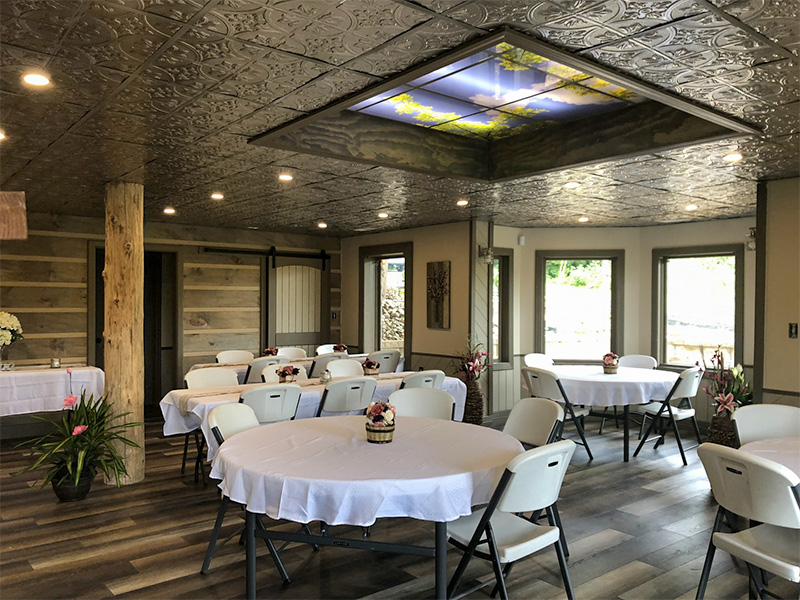
Since then, the ceiling tile has evolved well beyond traditional pressed steel. Today, manufacturers offer decorative ceiling tiles in materials such as thermoformed vinyl, PVC, metal and other lightweight materials, with patterns ranging from faithful reproductions of historic tin ceilings to geometric and contemporary designs. Materials like PVC are able to appear like authentic metals which is how they get nicknamed faux-tin ceiling tiles.
Modern tiles can also provide practical benefits such as easier installation as they can drop into a standard ceiling grid or be glued-up directly to most flat surfaces. Some materials like Styrofoam and PVC can stand up to moisture making it mold and mildew resistant. And there are backings that can be added to authentic metal tiles for acoustic performance (muffling sound in home movie theaters or creating better acoustics in home studios).
Tin ceiling tiles were the American response to creating affordable and durable designs inspired by European traditions. They were a mass-market way for homeowners to beautify their homes and an easy way for public spaces like commercial buildings to bring a touch of elegance and be on-trend with the styles of the time. Places like Fort Baker and the Tenement Museum still have beautiful examples of this late 19th century trend. If you'd like to try a metal ceiling in your home or business, click here to see our collection of tin ceiling tiles.