Wainscoting has stood the test of time. Once used to insulate stone walls and prevent damage from furniture, today it’s appreciated for the look, structure and texture it brings, and in recent times, they’re more popular than ever!
Whether you’re restoring an older home or adding character to a modern interior, wainscoting brings both function and craftsmanship, connecting centuries of design history with today’s décor trends.
Explore our Wainscoting Panelscollection to find the perfect style, material and finish for your next project, or contact our expert team for some friendly and helpful advice.
What Is Wainscoting and what’s its purpose?
Wainscoting refers to decorative wall paneling that typically covers the lower portion of an interior wall. Traditionally made of solid wood, wainscoting was designed to insulate and protect walls from moisture, furniture marks and daily wear. In older homes, especially those built with stone and plaster, it also added an extra layer of warmth. *1
Over time, it became a symbol of craftsmanship and refinement, appearing in manors and public buildings throughout Europe. Its paneled appearance added structure to interiors and therefore highlighted the proportions of each room. *1
Today, wainscoting comes in a wide range of materials, from paint-grade MDF and lightweight PVC to traditional hardwood panels, making it suitable for both residential and commercial projects. Modern manufacturing has made it more accessible to the broader market and much more simple to install, allowing homeowners to achieve the same classic look a lot easier than it used to be.
Origins of the name
The term “wainscot” originates from English and earlier Dutch and German roots “wagenschot” or “wageschot”, meaning “wall board” or “fine oak paneling.” Historically, it referred to the high-quality oak imported from the Baltic region that was used in decorative interior paneling. These durable boards were appreciated for their smooth finish and stability. *2
Though its purpose has evolved, wainscoting continues to balance both function and style, adding texture and depth to hallways, dining rooms, living spaces and beyond.
Early Origins: Medieval Europe
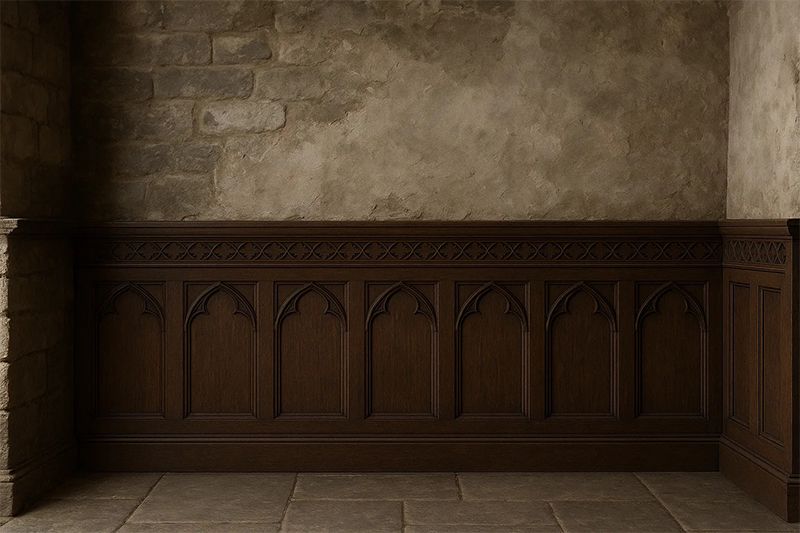
Wainscoting dates back to the Middle Ages in Northern Europe, where stone and plaster walls were common. These walls were cold, porous and easily damaged, so wooden panels were installed on the lower sections to protect and insulate them.
During the 14th and 15th century in England and the Netherlands, oak was the preferred material. These panels were usually dark-stained or carved with simple patterns. Their primary role was functional, but as woodworkers became more skilled, designs grew more complex, and wainscoting began to take on decorative qualities.
By the Renaissance period, craftsmanship had advanced, and wainscoting became a symbol of wealth in manors and estates across Europe. *3
The Georgian and Colonial Eras: Refinement and Proportion
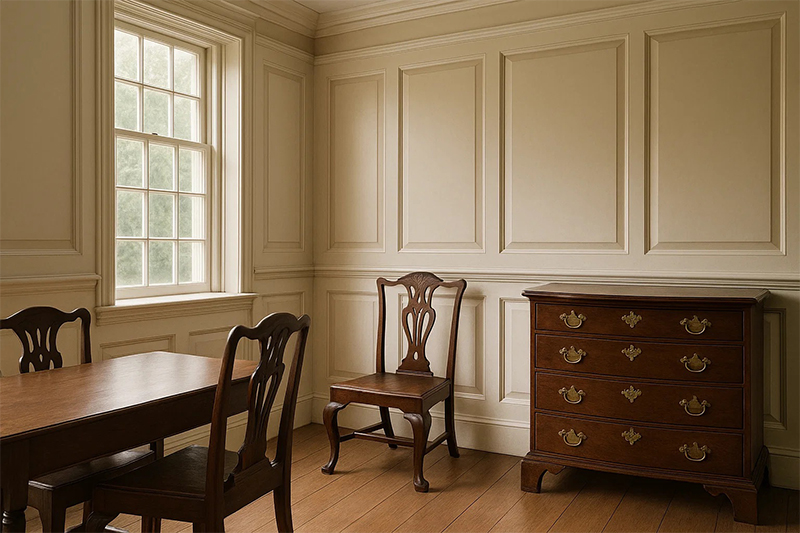
In the 18th century, wainscoting became more than just wall protection, it turned into a design feature that reflected the Georgian love for balance and symmetry. *4
Panels became more refined, often painted in soft creams or whites to contrast with darker wood furniture. In American Colonial homes, settlers adapted European styles to local materials, using pine, poplar and other readily available woods. *5
The design typically covered the lower third of the wall, creating a visually balanced room that felt both practical and elegant. *6
Victorian Era: Ornamentation and Luxury
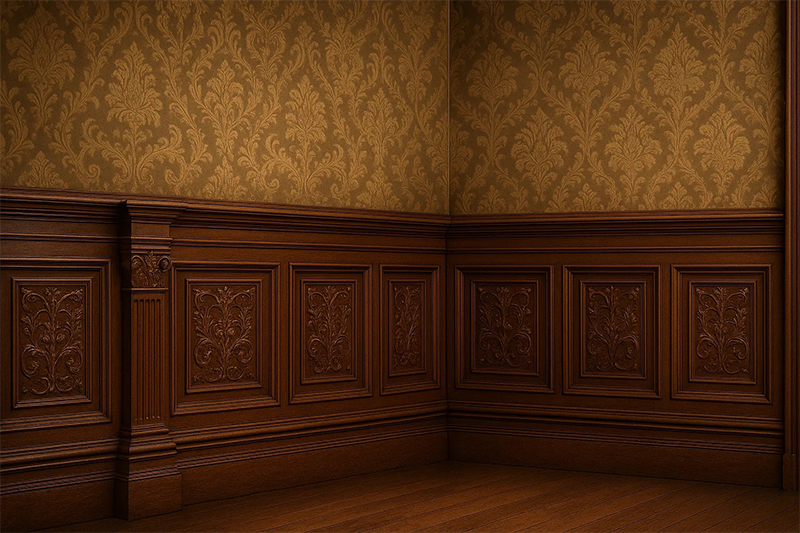
By the 19th century, especially during the Victorian period, wainscoting became more decorative than ever before. With advancements in manufacturing and woodworking tools, homeowners could afford panels with elaborate carvings, raised moldings and rich finishes.
High wainscoting, sometimes reaching shoulder height or even covering entire walls, was common in formal rooms such as dining rooms, libraries and parlors. Dark wood finishes like mahogany and walnut were favored for their rich tone and sense of grandeur.
This was also the era when wallpaper began to rise in popularity. Wainscoting provided a durable base for more delicate wall coverings, preventing damage and balancing the patterns above. *7
20th Century: Simplicity and Accessibility
In the early 20th century, wainscoting continued to appear in the homes owned by ordinary people, though in more simplified profiles and with painted finishes. Wood was no longer limited to the wealthy and mass production made wainscoting panels become more affordable and accessible to the broader market.
During the mid-century modern period, wainscoting briefly fell in popularity as the minimalism trend took hold. However, by the late 20th century, it made a comeback in both traditional and modern interiors, thanks to its timeless appeal and charm.
Modern materials like MDF, PVC and composite panels also made installation easier and more cost-effective, allowing homeowners to recreate classic looks with less maintenance. *8
Wainscoting in Modern Interiors
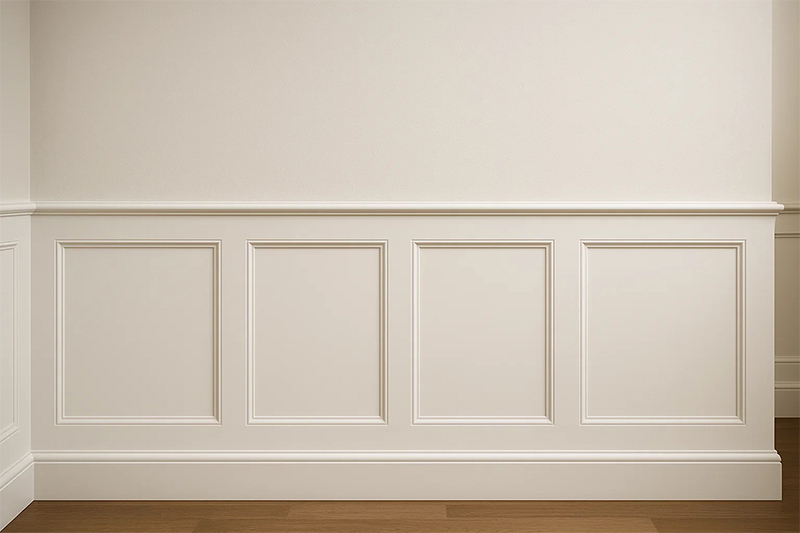
Today, wainscoting remains as relevant as ever. It’s no longer limited to traditional homes, modern designers use it to add architectural interest, depth and character to minimal spaces.
Painted wainscoting in contemporary colors, such as matte black, navy or forest green, creates contrast and sophistication. In modern farmhouse or coastal interiors, white or natural wood beadboard continues to be a popular choice.
In commercial settings, wainscoting adds a sense of structure and durability, especially in restaurants, offices or boutique interiors. It ties together a cohesive classic and fresh feel. *9
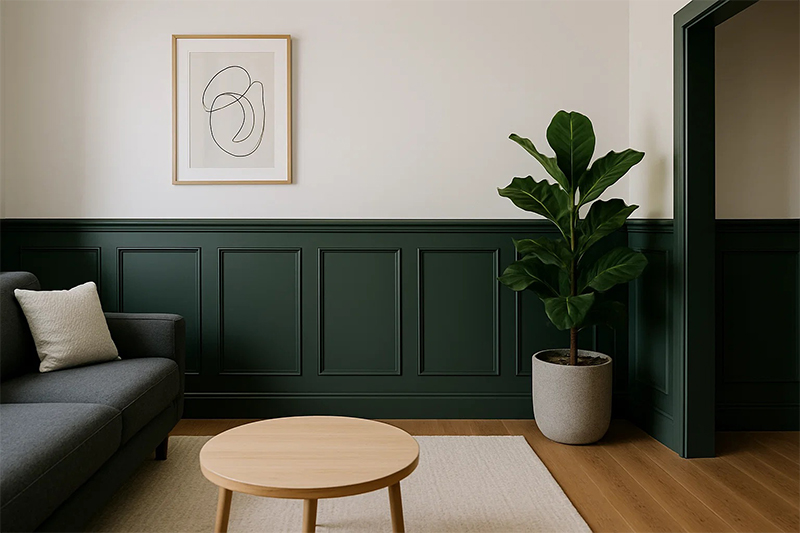
Popular Types of Wainscoting
While the term “wainscoting” is often used broadly, it actually includes several distinct styles:
Raised Panel Wainscoting
Originating in 17th and 18th century homes, raised panel wainscoting features beveled panels framed by decorative moldings. It’s formal, elegant and ideal for traditional or Colonial-style interiors. *10
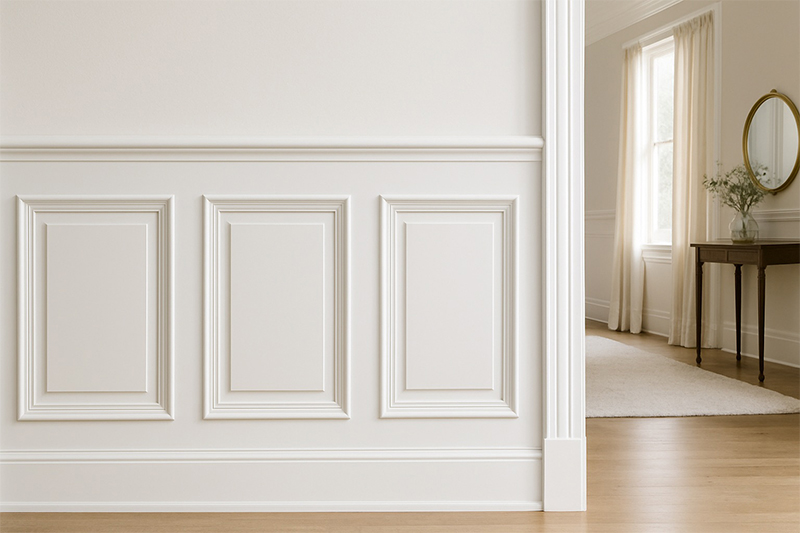
Flat Panel Wainscoting
This simpler design has flat inset panels and clean lines. It suits transitional and modern homes that prefer a more simple look. *10
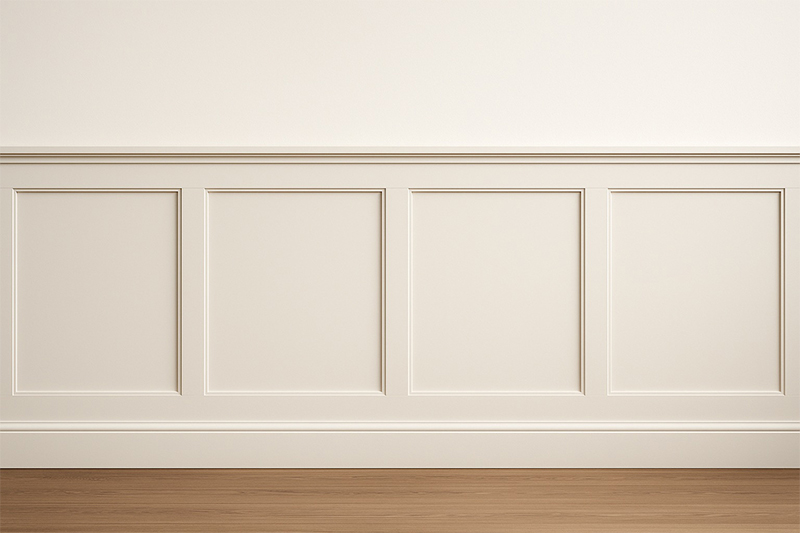
Board and Batten Wainscoting
Featuring vertical boards divided by thin battens, this design became popular in American farmhouses and Craftsman homes. It’s durable, versatile and fits both rustic and modern spaces. *11
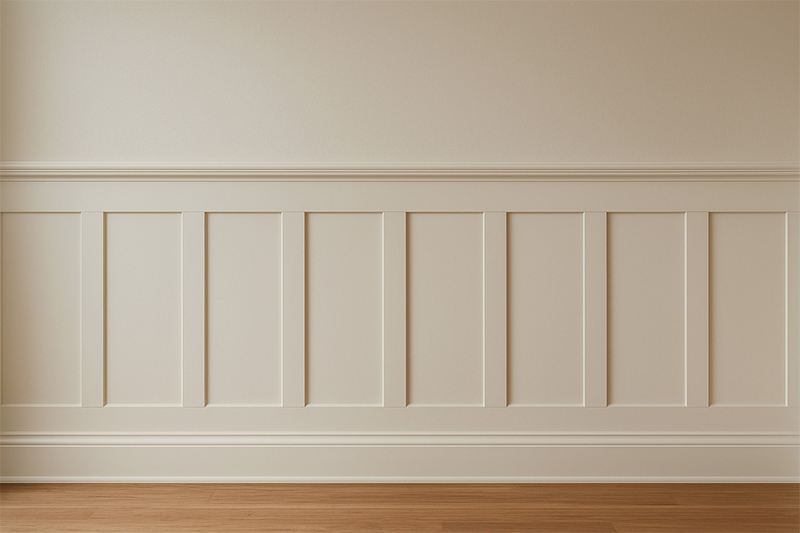
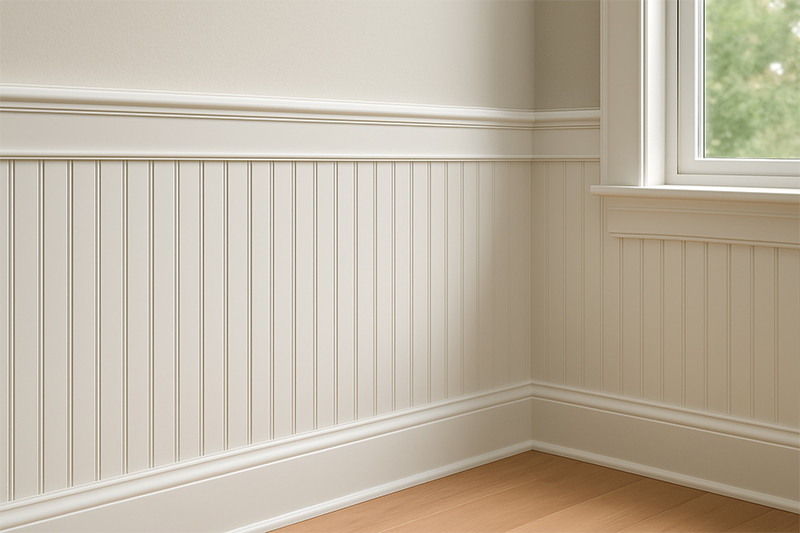
Beadboard Wainscoting
Recognizable by its narrow vertical planks, beadboard adds a cozy texture and charm. It’s often used in bathrooms, kitchens and beach-style interiors. *12
Overlay Wainscoting
Combining flat panels with decorative moldings applied on top, overlay wainscoting delivers depth without being overly ornate. *13
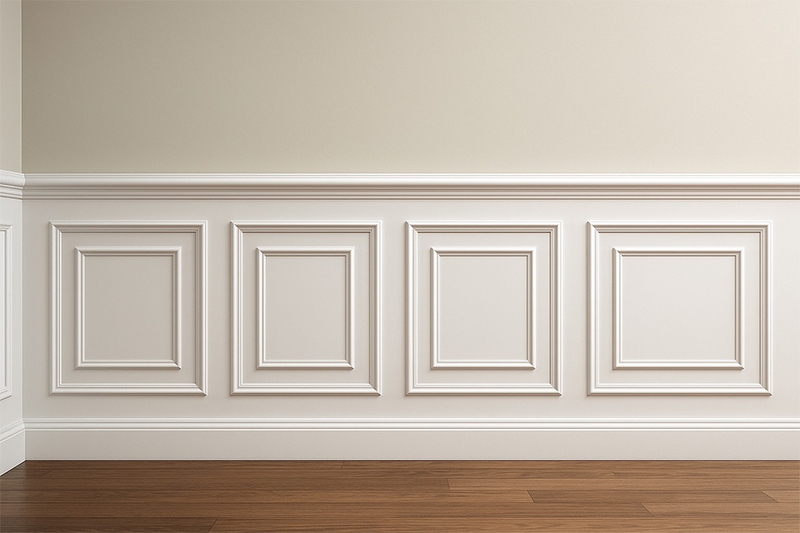
Each wainscoting style offers its own character and visual effect, from the classic elegance of raised panels to the clean simplicity of flat or board and batten designs. Whether you’re aiming for a traditional or modern look, there’s a wainscoting type to match your style.
Incorporating Wainscoting Into Your Home
Wainscoting can instantly make your room feel a lot more complete, by adding appeal, protecting your walls and helping define spaces. It’s a great way to bring character to any room, whether you prefer a traditional raised-panel look or a more relaxed beadboard style.
Here are a few ideas to help you integrate wainscoting beautifully into your space:
Entryways and Hallways
These high-traffic areas benefit most from wainscoting’s protective function. Installing durable panels helps guard against scuffs, bumps and scratches from daily use while giving the space a nice look. Taller panels or crisp white beadboard can make narrow hallways appear more open and bright. *14
Dining Rooms
For a classic and elegant feel, combine raised panel wainscoting with a chair rail and richly painted walls. The contrast between the smooth painted panels and deeper wall tones, like navy, forest green or warm neutrals, creates an inviting yet formal atmosphere. Decorative trim or crown molding can enhance the sense of height and refinement. *15
Bathrooms
Moisture-resistant materials such as PVC make it easy to introduce wainscoting into bathrooms without worrying about humidity. Painted white or light tones, beadboard gives a fresh, cottage-inspired look that goes well with tile and stone. It also hides minor wall imperfections. *16
Living Areas
In open-plan homes, wainscoting helps define different zones without using physical barriers. Flat-panel or board-and-batten styles provide structure. Extending panels slightly higher up the wall, around two-thirds of the height, can create a dramatic focal point behind sofas or fireplaces. *17
Bedrooms
Adding wainscoting behind the bed creates an instant statement wall. Soft and neutral colors promote calm, while darker tones, like charcoal or sage, add sophistication and drama. Flat or overlay styles work well here, offering texture without overwhelming the space. Pairing painted wainscoting with simple artwork or wallpaper completes the look. *18
Wainscoting is a design detail that can bring depth, texture and purpose to your walls. Whether used to define a hallway, improve a dining room or create a cozy bedroom retreat, it creates the perfect balance between good looking and practicality. With so many styles, materials and finishes to choose from, wainscoting offers a great way to transform any interior into a space that feels thoughtful, refined and complete.
Wrapping up
Wainscoting has been a charming and elegant method of beautifying homes for centuries. Originally being produced for practical reasons in grand settings, to becoming a much-loved and adored ornamentation for purely decorative purposes in anywhere from upmarket entrance halls to modern entertaining spaces in new homes.
Browse our range of wainscoting panels to find the right design for your upcoming project and if you have any questions or would like some friendly advice, please feel free to contact our team of experts at your convenience.
References
- *1 - How stuff works: Why Wainscoting Has Stood the Test of Time - https://home.howstuffworks.com/home-decor/decorating-styles-techniques/wainscoting.htm
- *2 - Britannica: Wainscot - https://www.britannica.com/art/wainscot
- *3 - Vincent Reed: Insight: The History of Wooden Panelling Part 1 - https://www.vincentreed.com/the-history-of-the-wood-panel/
- *4 - Met Museum: American Georgian Interiors - https://www.metmuseum.org/essays/american-georgian-interiors-mid-eighteenth-century-period-rooms
- *5 - Colonial Williamsburg: Architectural Report: Palace of the Governors of Virginia Block 20 Building - https://research.colonialwilliamsburg.org/DigitalLibrary/view/index.cfm?doc=ResearchReports%5CRR0133.xml
- *6 - House Design Coffee: Georgian Architecture in America - https://www.house-design-coffee.com/georgian-architecture.html
- *7 - Tablero: Victorian Wall Panelling Explained - https://www.tablero.co.uk/articles/1235-victorian-wall-panelling-explained/
- *8 - George Vincent: Elevate Your Home Decor: The Timeless Allure of Wainscoting - https://www.georgevincent.com/blogs/george-vincents-journal/elevate-your-home-decor-the-timeless-allure-of-wainscoting
- *9 - House Beautiful: What Is Wainscoting? How This DIY-Friendly Accent Can Enhance Your Home - https://www.housebeautiful.com/home-remodeling/diy-projects/a43840111/what-is-wainscoting/
- *10 - The Spruce: What Is Wainscoting? 4 Types You Need to Know - https://www.thespruce.com/what-is-wainscoting-8584241
- *11 - The Spruce: Board and Batten: Everything You Need to Know - https://www.thespruce.com/what-is-board-and-batten-177663
- *12 - The Spruce: 7 Types of Wood Paneling for Your Home - https://www.thespruce.com/wainscotting-vs-beadboard-paneling-5093363
- *13 - The Spruce: 36 Wainscoting Ideas for Traditional and Modern Spaces - https://www.thespruce.com/wainscoting-ideas-7642788
- *14 - Better Homes and Gardens: Gorgeous Wainscoting Ideas for Every Room - https://www.bhg.com/wainscoting-ideas-7229047
- *15 - Elle Decor: 32 Wainscoting Ideas That Are Brimming with Charm - https://www.elledecor.com/design-decorate/room-ideas/g31082190/wainscoting-ideas/
- *16 - The Spruce: 20 Versatile Beadboard Bathroom Ideas - https://www.thespruce.com/beadboard-bathroom-design-ideas-4135158
- *17 - Real Homes: 30 wall paneling ideas — modern and traditional panel designs - https://www.realhomes.com/design/wall-panelling-design
- *18 - Nikki’s Plate: 10 Bedroom Beadboard Wainscoting Ideas to Elevate Your Space - https://www.nikkisplate.com/bedroom-beadboard-wainscoting-ideas/